Re: Ubuntu vijesti
Postano: 03 ožu 2014, 18:28
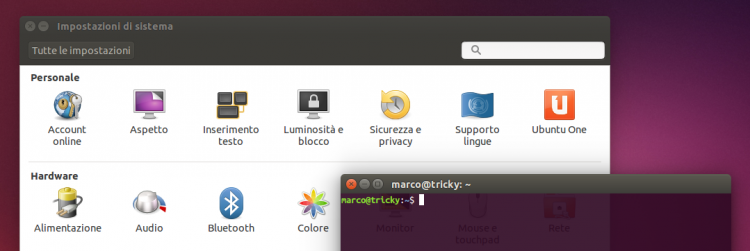
Ima u sistemskim podešavanjima, nije sakriveno.
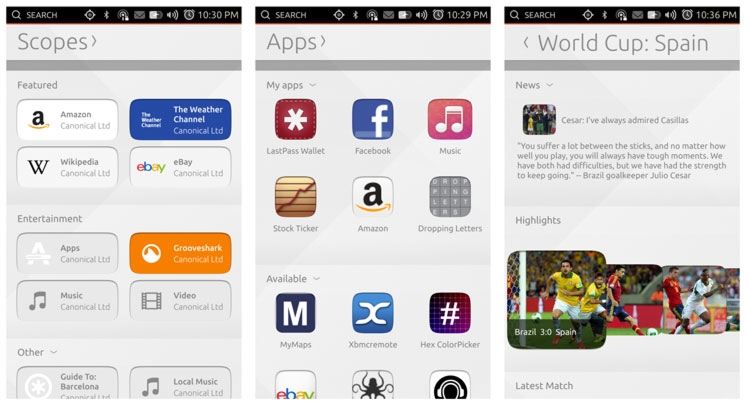
Privacy
No doubt keen to avoid a repeat of the backlash surrounding the desktop implementation, these ‘new scopes’ appear to have been built with privacy concerns baked in from the get go.
Each scope, whether added through the Scopes Store or enabled by default, will run independently in its own sandbox. This sandbox, Canonical say, “is enforced at the kernel level” thereby making it impossible for a scope to break out of the sandbox and do something it shouldn’t, like spam your contacts book.
But the insulation doesn’t stop there. Scopes will only be able to have one of two permissions: the ability to access the network or file system; they can’t have both. This approach “prevents a scope from retrieving sensitive information from the file system and then shipping it out via the network to some remote server.”


Ozone Mir is a fork of the Ozone Wayland work, as Carr notes:
“Investigation in to Ozone Mir quickly lead to the observation that a large amount of code would need to be duplicated between them. In order to try to improve this situation, we have instead based our Ozone Mir work off of Ozone Wayland.
Ozone Mir creates a new set of interfaces on the GPU process side abstracting the idea of utilizing an external EGL compositor.”
The Ubuntu fork maintains the Wayland code but, Carr explains, also “enables [a] set of now shared components from Ozone Wayland to build both a Mir and Wayland backend.”
Mir developers are now hoping that these “shared components” can be merged upstream in Chromium, to benefit both projects, furthering the collaboration started by Intel and Wayland with the Chromium team.
But precisely when, or indeed if, such merge proposals will be accepted remains unknown for now.
Mark Shuttleworth poziva da se završi sa ACPIjem.Mark Shuttleworth has called for an end to ACPI (the Advanced Configuration and Power Interface) and other executable firmwares that could prove to be attack vectors on PCs, phones, and other devices.
Mark wrote in his latest blog post, "we DO live in an era where any firmware code running on your phone, tablet, PC, TV, wifi router, washing machine, server, or the server running the cloud your SAAS app is running on, is a threat vector against you...Arguing for ACPI on your next-generation device is arguing for a trojan horse of monumental proportions to be installed in your living room and in your data centre. I’ve been to Troy, there is not much left."
Mark wants Ubuntu to be part of fixing security problems with firmwares and is calling for greater innovation within the upstream Linux kernel to not be dependent upon ACPI and older, less-secure interfaces. Mark is also calling for a declarative firmware that doesn't include executable code.